Why choose FordPartsGiant
- Devoted Service
At FordPartsGiant.com, we strive to make customer satisfaction our #1 goal by providing dedicated customer service. Our core values of success continue to demonstrate our loyalty by building dedicated relationships with all of our current and future customers. We are always ready to assist you with the slightest detail about your Ford Bronco parts and accessories.
- Reasonable Prices
We are the right online source for discounted prices on OEM Ford Bronco parts and accessories. Not everyone has the money to buy their vehicle quality parts, here at FordPartsGiant.com we make it economical to buy genuine Ford Bronco parts without sacrificing the quality or hurting your wallet.
- Swift Delivery
FordPartsGiant.com has centrally located distribution centers all across the United States. This gives you quick access to our discounted Ford Bronco parts when you need them. We offer our customers the convenience of having parts delivered straight to their front door. We are committed to having your Ford Bronco up and running in just a couple of days.
Popular Genuine Ford Bronco Parts
- Engine Parts View More >
- Lamps & Wiring Parts View More >
- Wheels & Brakes Parts View More >
- Fuel System & Manifolds Parts View More >
- Speedometer, Bumpers, Mirrors & Wipers Parts View More >
- Automatic Transmission Parts View More >
- Radiator & Grill Parts View More >
- Steering System & Drive line Parts View More >
- Fenders & Hood Parts View More >
- Air Conditioner, Radio & Shock Absorbers Parts View More >
- Frame, Exhaust System & Springs Parts View More >



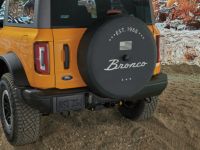

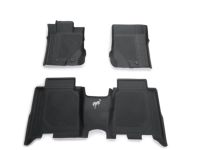
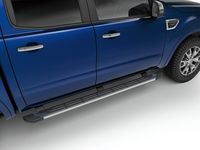
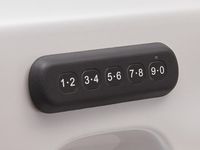
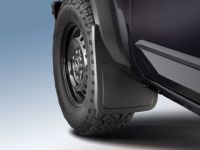
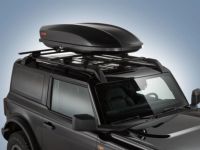

Shop Genuine Ford Bronco Parts with FordPartsGiant.com
The Bronco is a sports utility vehicle. A short-wheelbase version was launched, to which it was offered a 16 in (41 cm) longer wheelbase, full-size four-door to compete with other corporations. Four-wheel drive is offered, and a seven-speed manual transmission is available for those who want to row their own gears. The Ford Bronco responds quickly with a 10-speed automatic transmission and reaches 60 mph from a standstill in 7.3 seconds, considering the big tires and four-door configuration. With such gearboxes, the fuel economy is respectable, and ranges from 17 to 20 mpg combined, while the six-cylinder variant is 17 mpg combined. For the fifth generation, additional changes related to safety were added, such as a 4-wheel anti-lock braking system (ABS) replaced rear-wheel ABS and a driver-side airbag. For powertrains, this generation retained the previous 4.9L inline-6, 5.0L V8, and the 5.8L H.O. engines. For the last version, the new engine is a 2.3-liter turbocharged EcoBoost inline-four. It makes 300 hp and a torque of 325 lb-ft. A 2.7-liter is optional with 330 hp (335 PS; 246 kW) and 415 lb-ft (563 Nm; 57 kgm) of torque. The device is equipped with either a 10-speed automatic or a 7-speed Getrag manual. Other equipment includes Dana axles with front and rear electronic differentials. The drivetrain can toggle between 4WD, and 2WD High (rear-wheel drive). The truck also has other unique features. Doors can be user-removed and stored in the rear cargo area. Mirrors are attached to the body cowl instead of on the doors. Trail sights are used to facilitate navigation as well.
Although the Ford Bronco is a formidable off-road vehicle, battling harsh terrains often hastens wear and tear, leading to common issues. One such problem is the reduction in engine performance, characterized by consistent rough idling, a noticeable drop in power and acceleration, excessive oil consumption, poor fuel economy, and the sporadic activation of the Check Engine Light. If your Bronco exhibits these symptoms, inspect the EGR valve, EGR filter, and oxygen sensor for faults. Another common issue involves the suspension system, often signified by issues with the steering tilt function, inability to lock the steering wheel, and audible clunking or grinding noises during steering. The steering wheel may also operate roughly or fail to return to center. In such cases, the upper steering column bearing might require inspection. Don't overlook the electrical components, such as the window switch, or essential parts like the front and rear door strikers, as these components can easily wear out and require frequent maintenance.
Genuine parts are first-rate in terms of quality and functionality. Manufactured directly by Ford, they undergo rigorous testing and are made from dependable materials to ensure long-lasting durability and dependability. If you are looking for affordable high-quality OEM Ford Bronco parts, like Door glass and fittings, Manual Transmission, then you have come to the prime place. Our website provides a large amount of genuine Ford Bronco parts, such as Body at unbeatable prices. All our parts come backed with the manufacturer's warranty.
Ford Bronco Parts Questions & Answers
- Q: How to remove and reinstall the manual Transmission Assembly on the Ford Bronco?A: Disconnect the battery negative cable. Drain the transmission lubricant into a suitable container. Raise the vehicle and support it securely on jackstands. Remove the shift lever on vehicles equipped with direct-shifting transmissions. Detach the shift linkage at the transmission on vehicles equipped with a column shift. Disconnect the electrical connector from the back-up light switch. Remove the speedometer cable and gear assembly on 1991 and earlier 2WD models. Disconnect the clutch hydraulic line from the slave cylinder on vehicles with a concentric slave cylinder. Remove the external slave cylinder from the transmission housing on 5-speed models equipped with a 7.5L engine. Disconnect the driveshaft on 2WD models. Remove the transfer case shift lever assembly and transfer case on 4WD vehicles. Remove the starter motor from the transmission on 5-speed models. Support the transmission with a transmission jack. Remove the transmission rear mount. Remove the gussets if installed. Remove any harness ties on the crossmember and remove the crossmember. Remove the transmission retaining bolts from the rear of the clutch housing on 3 and 4-speed transmissions. Remove the transmission case-to-engine block retaining bolts on 5-speed models. Slowly withdraw the transmission straight back to disengage the input shaft from the clutch disc. Lower the transmission and remove it from beneath the vehicle. Check all clutch related components and replace worn parts as required. Prepare the release bearing for reinstallation. Install the clutch housing if removed. Secure the transmission to the transmission jack and raise it up. Verify that the dowel pins are installed in the engine block. Wiggle the transmission forwards, inserting the input shaft through the release bearing hub and into the clutch disc splines until the transmission mates with the clutch housing. Wiggle the transmission forwards, inserting the input shaft into the clutch disc splines until the transmission mates with the engine block. Install the retaining bolts and tighten them to the torque. The remainder of installation is the reverse of removal. After connecting the line to the concentric slave cylinder, bleed the clutch hydraulic system.
- Q: Is it more practical and economical for the home mechanic to purchase a replacement cylinder head rather than disassembling, inspecting, and reconditioning the original on Ford Bronco?A: New and rebuilder cylinder heads are usually in stock for most engines at the dealers' shops or auto parts' stores. Again since, the appropriate tools are required for the disassembly and inspection of the head along with the fact that replacement parts may not always be readily available it may well be cheaper for the home mechanic to purchase a new head than to carry out the whole process of disassembly, inspection and reconditioning the original one. The disassembly includes the removal of intake and exhaust valves as well as other attaching ribs such as rocker arms and fulcrum which are to be labeled during removal to enable easy reinstallation due to their individual unique positions. Before the removal of the valves, the valves and related components must be placed in such a way that in the course of the valve replacement, correct valve guides can easily be identified. A spring compressor is used in removing the keepers, the retainer, spring, damper, stem seal, as well as the valve from the first valve and all these are stored together while the seal is disposed. If this happens, a valve can be pushed back into the head; Moreover, the region of the keeper groove needs to be 'cleaned' with a very fine file or whetstone. The same should be done with other valves and all the parts of each valve should be placed together to facilitate easy reassembly. Further, after removal of all valves and other related components-the head should be cleaned and inspected, and if the job at hand is an engine rebuild, one should get the complete disassembly of the engine done before a process of cleaning and inspection of the head starts.
- Q: How to adjust the rear wheel bearings on Ford Bronco?A: For 1987 and earlier models with a Dana axle, begin by raising the rear of the vehicle and securing it on jackstands. Remove the axleshafts, then take out the locking wedge from the adjusting nut keyway slot using a screwdriver, ensuring this is done before removing or turning the adjusting nut. Loosen the wheel bearing adjusting nut with the appropriate large socket. While rotating the hub/drum assembly, tighten the adjusting nut to 120 to 140 ft-lbs, then back it off to achieve 0.001 to 0.010 inch endplay, which should require about 1/8 to 3/8 of a turn. Position the locking wedge in the keyway and hammer it into place, ensuring it is fully seated against the shoulder of the adjusting nut. The locking wedge and adjusting nut can be reused if the wedge cuts a new groove in the nylon retainer material; otherwise, replace them if damage is evident. After installing the axleshaft, check the lubricant level in the differential and add if necessary, then test drive the vehicle and check for leaks. For 1987 and later models with a Ford axle, use a hub nut wrench to engage the four slots in the hub nut and loosen it, noting that the hub nuts have different thread directions for right and left hubs. Tighten the hub nut to 55 to 65 ft-lbs while rotating the hub, then back it off, listening for clicks-five clicks for new bearings and eight for used ones. Install the axleshaft, check the lubricant level in the differential, and test drive the vehicle to check for leaks.
- Q: What components make up the rear axle shaft assembly and how does it support the Ford Bronco's weight?A: The rear axle assembly of a vehicle involves a longitudinal, thin-walled tubular housing that houses a differential and axleshafts, to support the vehicle's sprung weight by using vertical locations of the axle housings on the vehicle frame rails by means of its springs that can be coil, or a leaf spring type. Vehicles utilize two designs of rear axle assemblies: Semi-floating axleshafts and full-floating axleshafts with even more robust construction are other types of axleshafts. A full-floating axleshafts do not carry any of the vehicle mass, may be easily pulled off the tapered roller wheel bearings and are intended solely for power transmission to the rear wheels only. On the other hand, there are 'semi-floating' axleshafts which are parts of the rear wheel support system-they not only transfer power, but also carry part of the vehicle weight. In both designs hypoid gears are used with the pinion gear centre line being below that of the axleshaft centre line. Because of this, it is recommended that work on these models be restricted to specific uses, and for any repair or overhaul requirements, the axle assembly should be removed and brought to a rebuilder or exchanged with new or refurbished ones as buying individual axle parts for repair locally has become quite difficult. When replacing an axle unit, it is thus important that the unit be of the same type, as well as have the same gear ratio.